Jesus and the Roots of Contributionism: A Forgotten Blueprint for Regenerative Community

Most people talk about Jesus as a spiritual teacher, a healer, or a moral guide. But woven through his teachings is something deeper — a quiet, radical economic model built on contribution, reciprocity, and shared stewardship. Long before modern systems thinking, before “Ubuntu,” before regenerative design had a name, Jesus taught a way of living that mirrors the core principles of Contributionism.
This isn’t about religion. It’s about recognizing that ancient wisdom already understood what modern communities are rediscovering: people thrive when they contribute, not when they accumulate.
A Community Built on Shared Stewardship
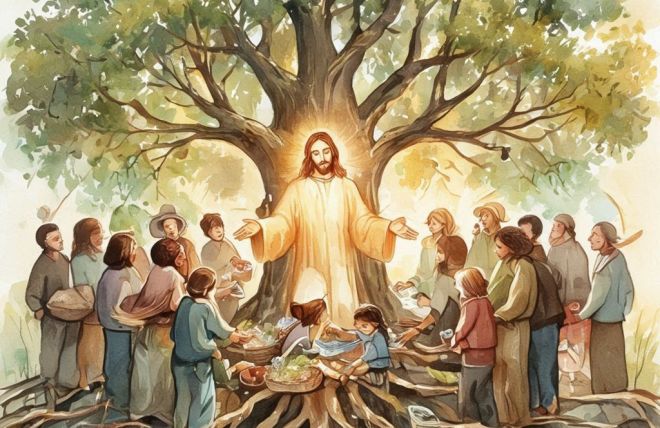
The early Jesus movement didn’t operate like a church or a charity. It functioned more like a contribution‑based community.
Acts describes it simply: “All the believers were together and had all things in common.” (Acts 2:44)
And again: “They distributed to anyone as he had need.” (Acts 2:45)
This wasn’t forced redistribution. It was voluntary, dignity‑based stewardship — the heart of Contributionism.
Contribution as Identity
Jesus consistently flipped the script on value:
-
The greatest is the one who serves “Whoever wants to be first must be servant of all.” (Mark 9:35)
-
Wealth is meaningless without generosity “Life does not consist in the abundance of possessions.” (Luke 12:15)
-
Community is stronger than individual accumulation “Give, and it will be given to you.” (Luke 6:38)
Contribution wasn’t a side note — it was the center of his message.
Why This Matters Today
Modern regenerative communities are wrestling with the same questions:
-
How do we build systems that honor dignity?
-
How do we share resources without creating dependency?
-
How do we reward contribution without creating hierarchy?
-
How do we design economies that strengthen community instead of extracting from it?
Jesus’s model offers a blueprint: shared stewardship, voluntary contribution, and dignity through participation.
A Forgotten Economic Wisdom
Contributionism isn’t new. It’s ancient.
Jesus taught: “Where your treasure is, there your heart will be also.” (Matthew 6:21)
He wasn’t talking about money. He was talking about alignment — contribution as a way of life.
This is the foundation of regenerative living — and Jesus was teaching it 2,000 years ago.
Jesus and the Roots of Contributionism: A Forgotten Blueprint for Regenerative Community
Most people talk about Jesus as a spiritual teacher, a healer, or a moral guide. But woven through his teachings is something deeper — a quiet, radical economic model built on contribution, reciprocity, and shared stewardship. Long before modern systems thinking, before “Ubuntu,” before regenerative design had a name, Jesus taught a way of living that mirrors the core principles of Contributionism.
This isn’t about religion. It’s about recognizing that ancient wisdom already understood what modern communities are rediscovering: people thrive when they contribute, not when they accumulate.
A Community Built on Shared Stewardship
The early Jesus movement didn’t operate like a church or a charity. It functioned more like a contribution‑based community.
Acts describes it simply: “All the believers were together and had all things in common.” (Acts 2:44)
And again: “They distributed to anyone as he had need.” (Acts 2:45)
This wasn’t forced redistribution. It was voluntary, dignity‑based stewardship — the heart of Contributionism.
Contribution as Identity
Jesus consistently flipped the script on value:
-
The greatest is the one who serves “Whoever wants to be first must be servant of all.” (Mark 9:35)
-
Wealth is meaningless without generosity “Life does not consist in the abundance of possessions.” (Luke 12:15)
-
Community is stronger than individual accumulation “Give, and it will be given to you.” (Luke 6:38)
Contribution wasn’t a side note — it was the center of his message.
Why This Matters Today
Modern regenerative communities are wrestling with the same questions:
-
How do we build systems that honor dignity?
-
How do we share resources without creating dependency?
-
How do we reward contribution without creating hierarchy?
-
How do we design economies that strengthen community instead of extracting from it?
Jesus’s model offers a blueprint: shared stewardship, voluntary contribution, and dignity through participation.
A Forgotten Economic Wisdom
Contributionism isn’t new. It’s ancient.
Jesus taught: “Where your treasure is, there your heart will be also.” (Matthew 6:21)
He wasn’t talking about money. He was talking about alignment — contribution as a way of life.
This is the foundation of regenerative living — and Jesus was teaching it 2,000 years ago.